We Almost Canceled the Show That Saved Our Theatre
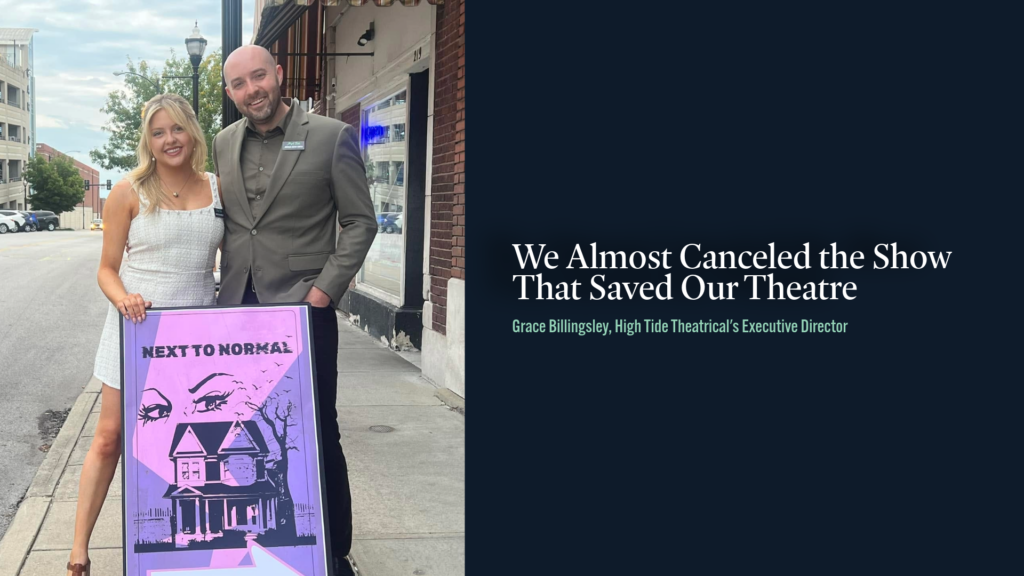
Just weeks before auditions for our 2024 production of Next to Normal, I called an emergency meeting of High Tide Theatrical’s Board of Directors.
We were in our first full season, and the numbers weren’t working. Producing the show would require us to invest nearly every dollar we had. Finalizing our licensing agreement alone would leave our bank account dangerously close to empty, with an entire production still ahead of us.
For hours, we talked about why moving forward was a terrible idea. We discussed the financial risks, the limitations of our space, and the reality that we simply didn’t have the resources to produce a musical of this magnitude comfortably.
Canceling seemed like the responsible decision.
But canceling a production during our first full season carried its own consequences. We were still establishing ourselves, building an audience, and trying to earn the community’s confidence. I wasn’t sure we could recover from losing that momentum.
Eventually, the conversation stopped. We sat in silence, knowing there wasn’t a particularly good option in front of us.
Finally, I said four words.
“We have to do this.”
And our board backed that decision unanimously.
None of us could have known just how much was riding on it.
Something Extraordinary Happened
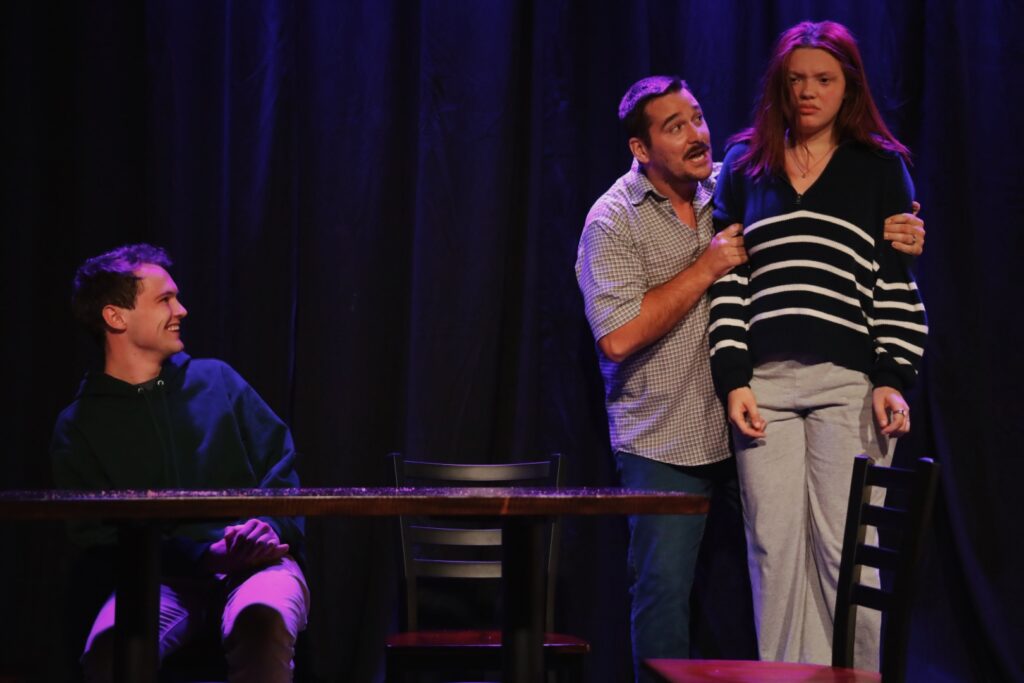
When Next to Normal opened, the response was immediate.
People came to see the show, then returned to see it again. They brought friends, family members, and anyone they could convince to experience what they had witnessed.
We sold out our performances. Then we extended the run.
But ticket sales were only part of the story.
Audiences wept openly. Some patrons became so overwhelmed that they needed to step outside, collect themselves, and return to finish the performance. Others approached us afterward to share deeply personal experiences with mental illness, grief, and the challenges of loving someone through circumstances they couldn’t control.
Again and again, we heard the same words: “I feel seen.”
Some patrons even shared that the production had encouraged them to begin addressing their own mental health.
I had spent my entire life around theatre, but I had never witnessed an audience respond quite like this.
The artistic response was equally remarkable. We heard from patrons who considered Next to Normal the finest production they had experienced in Springfield. Others compared High Tide’s intimate, immersive atmosphere to the kind of theatre they expected to find in Chicago or New York.
Until then, we were often perceived as a new group doing fun shows at the local gay bar.
Suddenly, people were recognizing something we had believed all along: High Tide was a serious company of artists capable of producing extraordinary work in an unconventional space.
Next to Normal didn’t make us those artists. It gave our community the opportunity to see what we were capable of.
The Art Was Always Bigger Than Our Resources
What’s remarkable about that original production is how little we had to work with.
High Tide didn’t own any of the technical equipment necessary to produce the show. Most of our props and costumes were borrowed, donated, or supplied by the cast and crew. Our financial resources were nearly exhausted before rehearsals even began.
We didn’t have the luxury of elaborate production elements or an extensive support team.
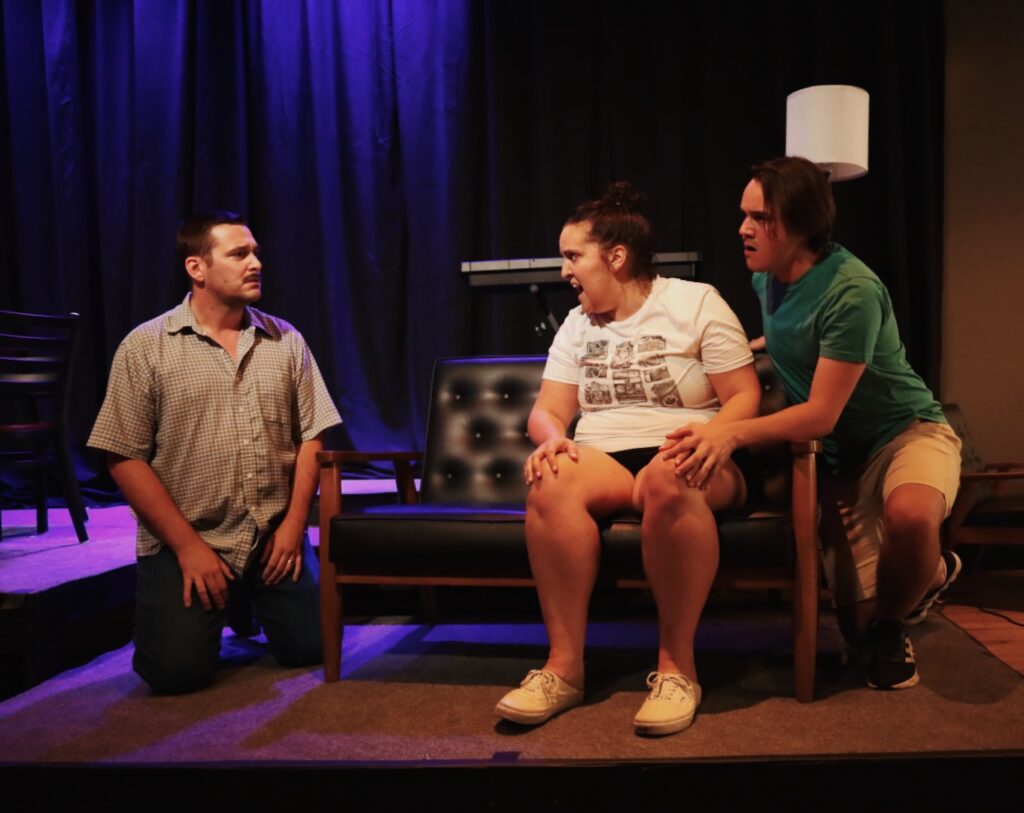
What we did have was an exceptional company of performers, Joshua David Smith’s brilliant direction, and a community of people willing to give what they could to make the production possible.
We also had the extraordinary generosity of Weston Donham and Martha’s Vineyard, whose support made it possible for High Tide to create theatre in a space unlike almost anything else in Springfield.
Our limitations didn’t make the art better. The artists made the art extraordinary despite those limitations.
And that distinction matters.
The original Next to Normal didn’t need spectacle to connect with its audience. Its strength came from the humanity of the performances, the intimacy of the room, and a creative team that understood exactly what the story required.
We had taken an enormous financial risk, and against what sometimes felt like impossible odds, that production became the breakthrough we desperately needed.
I don’t say this lightly: I believe Next to Normal saved High Tide Theatrical.
What I Didn’t Expect It to Do for Me
There’s another part of this story that I’ve never fully shared.
I lost my dad not very long before our original production of Next to Normal.
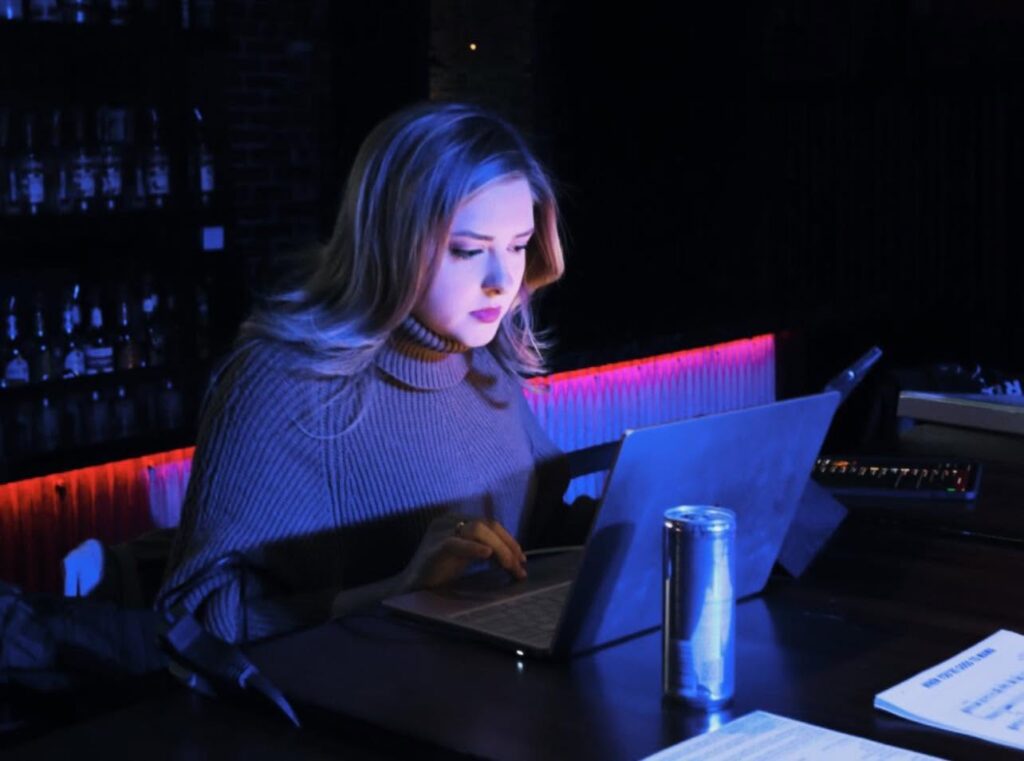
I was grieving while simultaneously trying to keep a young theatre company afloat. There were decisions to make, bills to pay, rehearsals to attend, and a production to deliver. Like so many people navigating loss, I was trying to keep moving.
And then there was Next to Normal.
For several rehearsals, I couldn’t sit through the entire show. The story hit too close to home. Its exploration of grief, family, mental illness, and the complicated ways we survive loss touched something I wasn’t quite ready to confront.
I had grown up around theatre. I understood its ability to entertain, challenge, and inspire. But I had never experienced it affecting me so profoundly.
Then, during one dress rehearsal, I finally sat down and watched the entire production.
And I wept.
I wasn’t thinking about ticket sales, production expenses, or whether we’d made the right decision to move forward. For those two hours, I was simply someone who had lost her father and needed somewhere to put that grief.
I needed to feel it. I needed to process it.
And somehow, sitting in that little blackbox theatre, surrounded by a story that was both deeply uncomfortable and profoundly human, I found the space to do exactly that.
Until that moment, I didn’t understand that theatre could be a vessel for grief.
That experience changed my life. It also fundamentally changed my understanding of what High Tide could be.
We could tell uncomfortable stories. We could advocate for people whose experiences were too often misunderstood or overlooked. We could create spaces where audiences recognized themselves in the lives of people onstage.
Most importantly, we could move people.
Suddenly, our mission wasn’t simply something we had written down when establishing the organization.
I had experienced it firsthand.
And when patrons told us they felt seen, I understood what they meant.
Because I had felt seen, too.
Look How Far We’ve Come
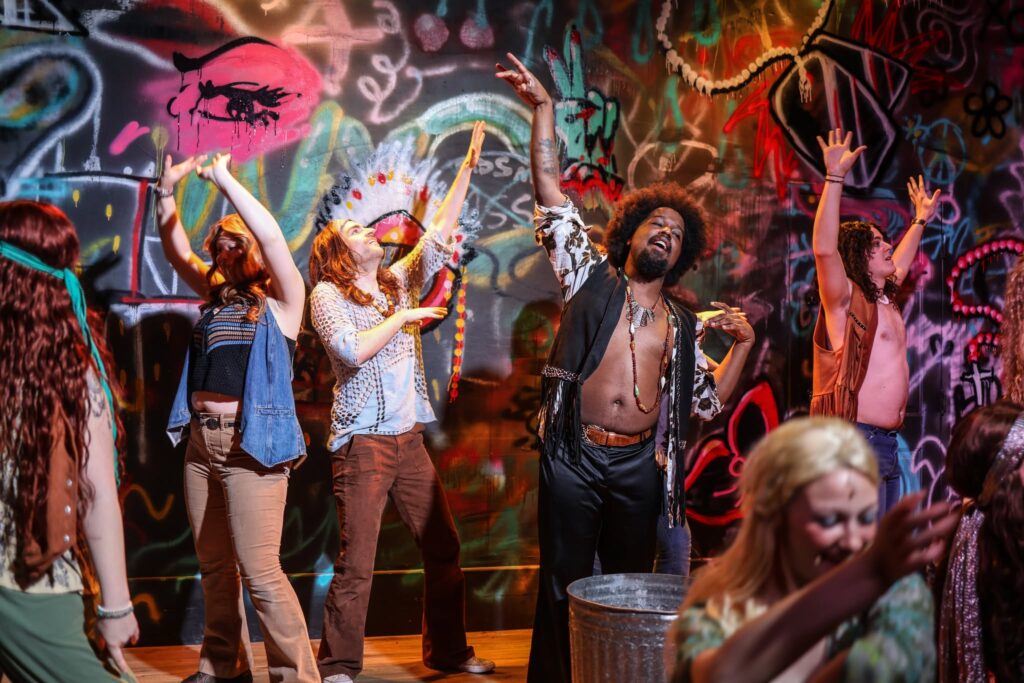
Two years later, High Tide is a remarkably different organization.
We still call the Lightroom Lounge at Martha’s Vineyard home. We still believe in the power of intimate, immersive theatre. And we remain committed to telling bold stories that encourage empathy, challenge assumptions, and bring people together.
But today, we have a much stronger foundation supporting that work.
Our team includes myself as Executive Director, Joshua David Smith as Artistic Director, Ethan Hoover as Technical Director, Jose DelaTorre as Patron Experience Manager, and Stephen as Master Carpenter. Alongside our growing community of volunteers, we’re building the organizational and production capacity necessary to sustain the artistic ambitions that once stretched us to our limits.
We can now approach an entire season with thoughtful financial planning, cash-flow projections, and a clearer understanding of the resources each production requires.
We’ve begun building our own technical inventory, giving our creative teams more freedom to focus on what they want to accomplish rather than constantly wondering how we’re going to make it happen.
And yes, we finally have comfortable chairs.
Anyone who attended Next to Normal in 2024 may remember our original seating. Our patrons certainly did—and they weren’t shy about telling us how much their backsides hurt.
Those complaints eventually inspired our Take a Seat fundraising campaign, which allowed us to replace the original chairs and improve the audience experience.
I still find something wonderfully funny about that. Audiences were so moved by the performances that they returned again and again, despite being physically uncomfortable.
Thankfully, this time, the only discomfort we hope you experience will come from the emotional honesty of the story.
All of these changes, from improved seating to stronger staffing and technical resources, represent something important.
High Tide hasn’t lost the ambition or willingness to take creative risks that defined our earliest years.
We’ve simply become better equipped to support them.
Bringing It Home
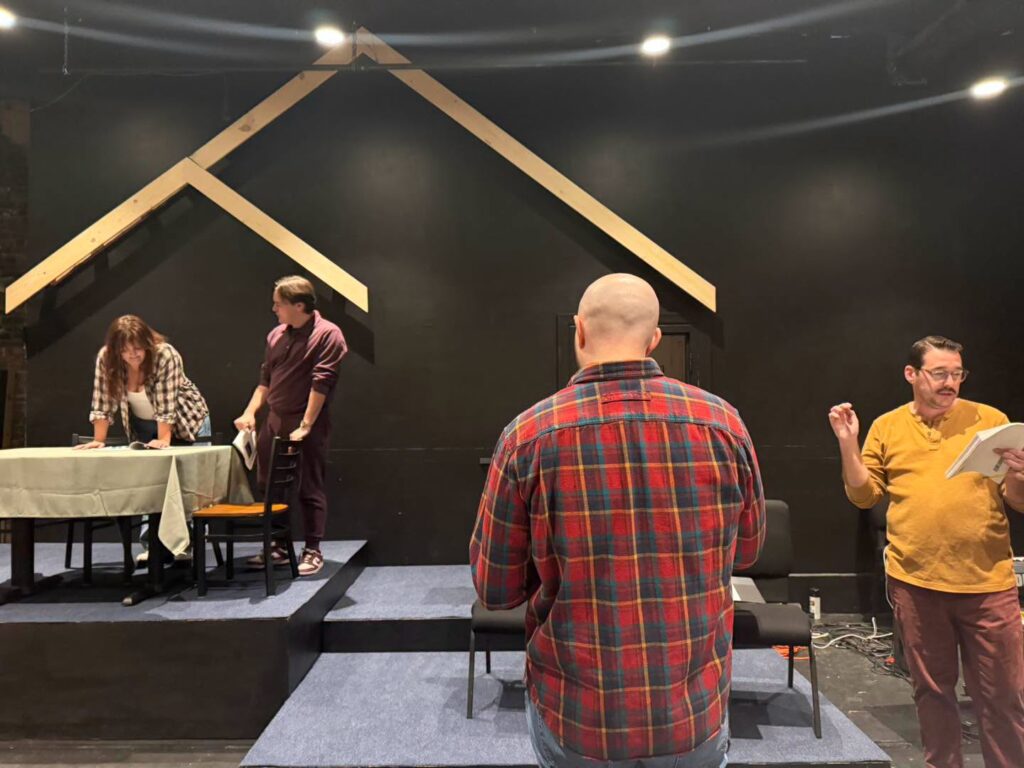
This December, the original cast and director of Next to Normal are returning to the Lightroom Lounge for a fully staged reunion benefit.
Not because we believe the original production needed to be fixed.
Quite the opposite.
I consider our 2024 production one of the greatest artistic accomplishments in High Tide’s history. The work those artists created with so few resources remains extraordinary to me.
But imagine what becomes possible when that same company returns two years later, bringing everything they’ve learned and experienced, supported by an organization that has grown alongside them.
We’re approaching this revival with new designs, enhanced technical elements, and a production team with greater capacity than ever before.
Most importantly, we’re bringing back the people who helped make the original so special.
There’s something deeply meaningful about returning to a production that came so close to never happening—a production that ultimately changed our trajectory as an organization and my understanding of why this work matters.
And it feels especially fitting to present this reunion as a fundraising benefit.
The proceeds from Next to Normal: A Reunion Benefit will support High Tide’s continued growth and operational sustainability. Those investments might not always be as visible as the performances themselves, but they’re what allow us to keep opening our doors, supporting our artists, and bringing ambitious stories to life.
In 2024, we nearly canceled Next to Normal because we didn’t know how we could afford to produce it.
In 2026, we’re bringing it back because our community helped us build a theatre capable of doing more.
I don’t know that I’ll ever be able to fully express my gratitude to the artists, volunteers, board members, supporters, and audiences who believed in High Tide when our future was anything but certain.
But I know this: I am enormously proud of what we’ve built together.
And I can’t wait to welcome you back to the show that put us on the map.
There will be light.
Next to Normal: A Reunion Benefit
December 9–13, 2026 | Six Performances
The Lightroom Lounge at Martha’s Vineyard
215 W. Olive St., Springfield, Missouri
The original cast and director reunite for a fully staged revival celebrating High Tide Theatrical’s past, present, and future.
This production is a special fundraising benefit supporting High Tide’s continued growth and operational sustainability. Season tickets cannot be redeemed, and VIP tables are not available.