

Why Small Theatres Close — and How We Avoid That
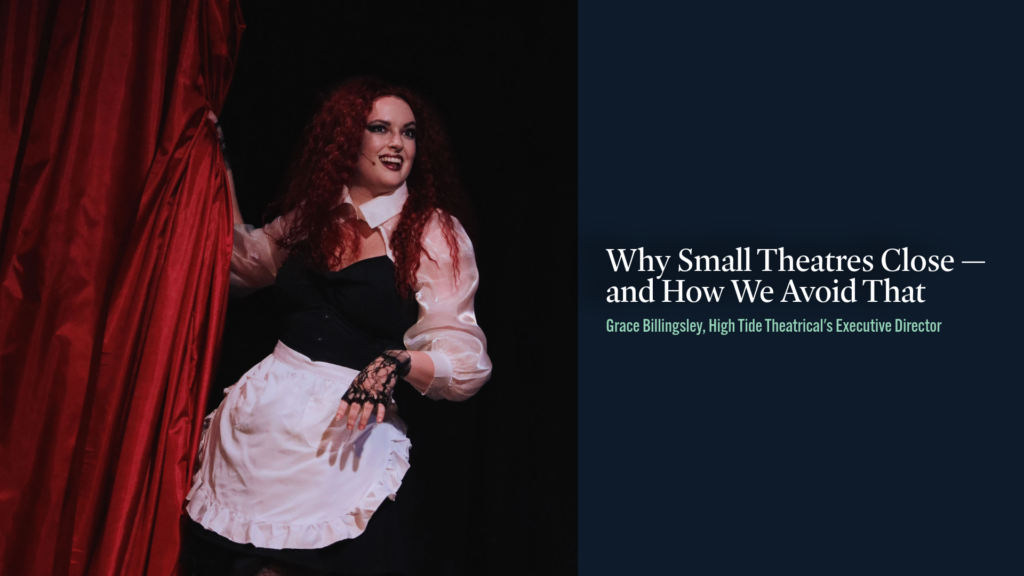
There is a strange contradiction at the heart of small theatre.
From the audience, you see the finished product: the lights come up, the actors walk onstage, the room fills with laughter or silence or applause, and for a couple of hours everything feels effortless.
Behind the curtain, it is almost never effortless.
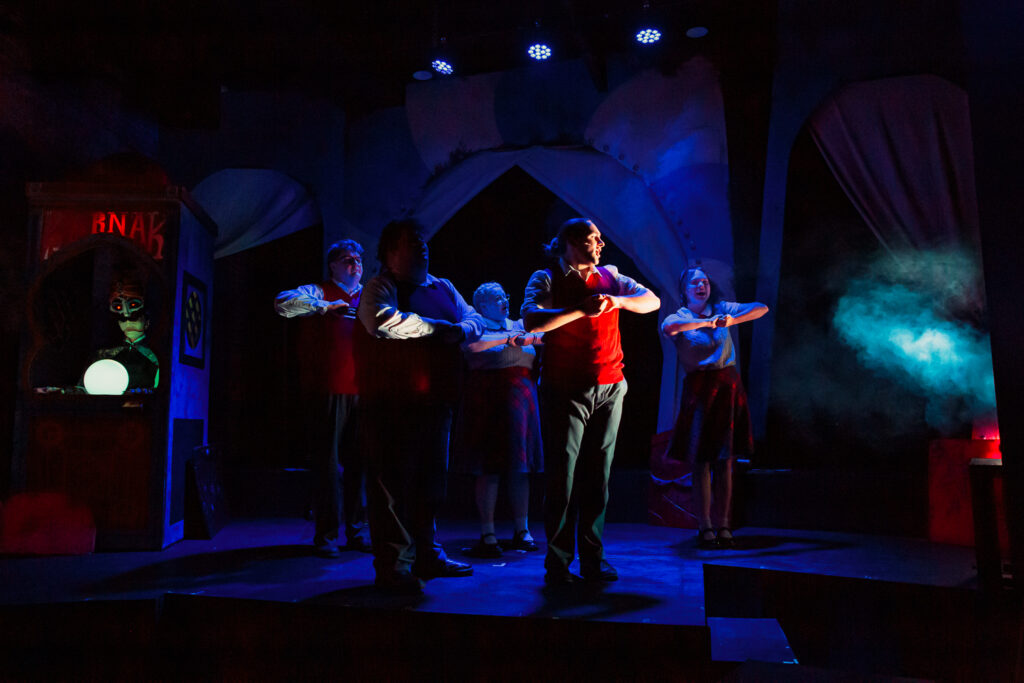
Running a small nonprofit theatre is not all glitz and glamour. Most of the time, it is spreadsheets, licensing invoices, fundraising emails, late-night problem solving, budgets, calendars, volunteers, grant applications, ticket reports and a very small group of people figuring out how to make something extraordinary happen with very little.
And that matters, because small theatres do close.
Our own community has been reminded of that recently. I don’t think the closing or pausing of an arts organization should ever be reduced to a cautionary tale. A theatre that serves its community for decades has created a legacy worth celebrating. But moments like that do force those of us doing this work to think seriously about sustainability.
Not just, Can we make the next show happen?
But, Can we make sure there is still a theatre here to produce the show after that?
The dangerous cycle of “the next show will pay for it”
One of the easiest traps for a small theatre to fall into is allowing one project to fund the next.
A show sells well, so that money pays for the licensing deposit on the next production. Then that production has to perform well enough to cover the next set of expenses. Then the next one has to do the same.
Eventually, every production is carrying the weight of everything that came before it.
It works — until it doesn’t.
A slower-selling show, an unexpected repair, a fundraising campaign that underperforms, or one large expense at the wrong moment can suddenly create a cash-flow problem that has very little to do with the artistic quality of the work.
That is one of the reasons an operating reserve is one of my biggest goals for High Tide.
I want us to reach a place where a production can simply be a production. Where its success matters tremendously, but where the future of the organization does not hinge on whether we sell another 30 tickets on Saturday night.
We’re not there yet.
Our cash flow can still be tight. We are still a young organization building financial stability while simultaneously producing an ambitious season.
But knowing where we are is part of knowing how we get where we’re going.
Growth can be dangerous, too
Growth sounds universally positive.
More shows. Bigger audiences. Better equipment. More programs. More people involved.
But growth costs money.
It also costs time.
One of the greatest risks for a young organization is growing faster than its infrastructure can support.
High Tide has grown enormously in a very short period of time, and our staff capacity is stretched. There are still too few people wearing too many hats. That is something I think about constantly.
Because burnout is not a sustainable business model.
Part of growing responsibly means building the organization underneath the productions: clearer systems, stronger administrative support, internships, defined responsibilities, better financial planning and more people who understand how the company operates.
The glamorous answer to growth is a bigger show.
The sustainable answer is often a better spreadsheet.
Unfortunately for me, I happen to love both.
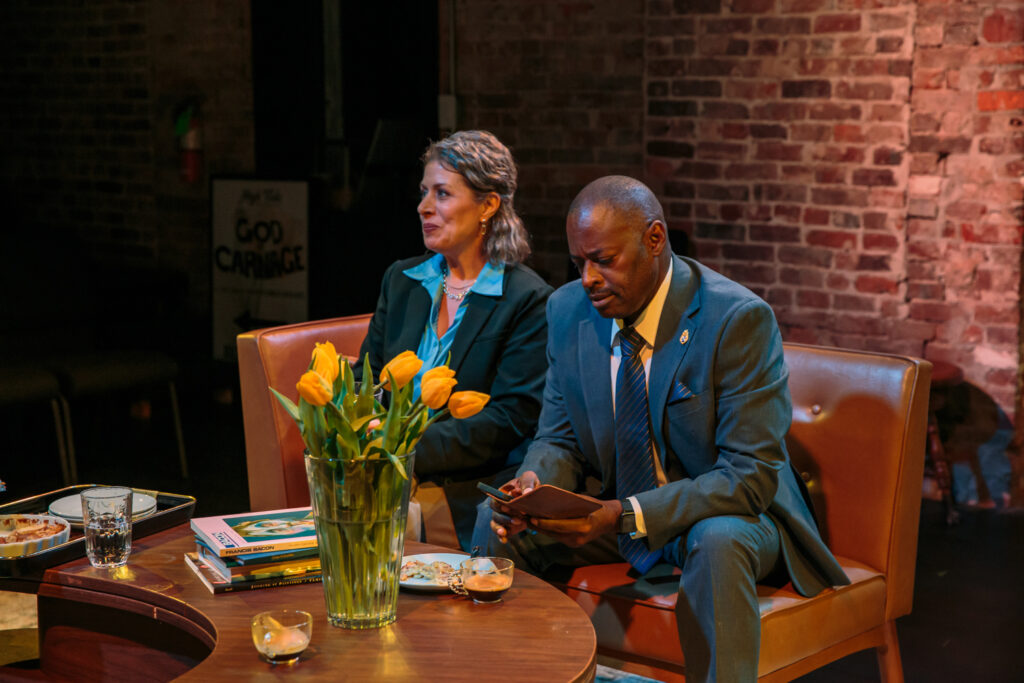
We are very, very serious about budgets
I am going to allow myself one proud Executive Director moment here.
Our creative teams do not go over budget.
They know what they have to work with, and they take that responsibility seriously.
That mentality has been part of High Tide from the beginning. We know how to make a dollar stretch, and we are genuinely proud of what our artists can create with limited resources.
Our Artistic Director, Joshua David Smith, has always firmly believed that beautiful theatre does not require spending a fortune.
Sometimes the limitation actually makes the work more interesting.
What can we reuse?
What can become something completely different six months from now?
Can a scenic element built for one production be redesigned for another?
Can technology purchased this season serve five productions next season?
Can we stage the moment differently instead of buying our way into solving it?
That thinking is already shaping our 2027 planning. We aren’t simply asking what each individual production needs. We are asking how investments can serve the entire season.
That doesn’t mean we never spend money.
It means we understand the value of it.
Sometimes the audience tells you exactly what you need
One of my favorite examples of High Tide’s growth has absolutely nothing to do with a show.
It involves chairs.
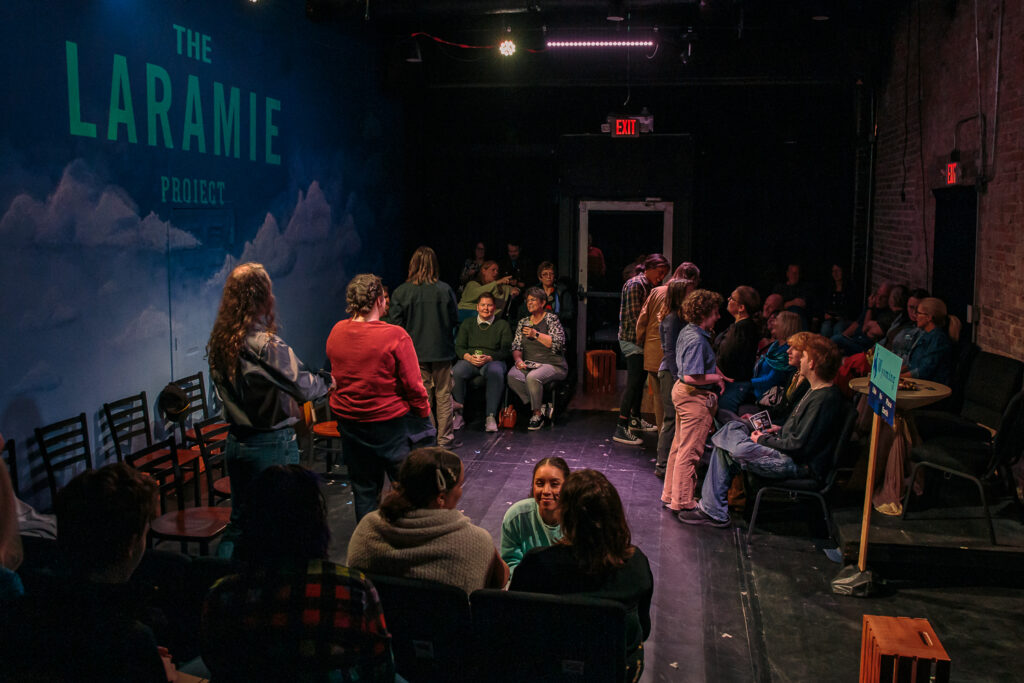
During our first two seasons, our audience sat in wooden chairs that had been incredibly generously donated by one of High Tide’s founding members, Micha Pelkey.
Those chairs helped make our earliest seasons possible. Full stop. We needed them, Micha showed up for us, and we will always be grateful for that.
There was only one problem.
Our patrons hated sitting in them.
And they told us.
Several people politely mentioned that they were uncomfortable. Others were a little less delicate.
A few quite literally told us they were a “pain in the ass.”
Fair enough.
But what happened next has shaped the way I think about fundraising.
Our patrons didn’t simply complain. Several of them told us, essentially: Ask us to help you fix it.
So we did.
Within a few months, High Tide purchased beautiful new black memory-foam chairs.
And our patrons and individual donors funded them.
Today, the names of those supporters are engraved on the backs of the chairs as a small thank-you and a permanent reminder of who helped build this theatre.
That experience taught me something that has stayed with me ever since:
People cannot help you solve a problem they don’t know you have.
Transparency has gotten High Tide farther than pretending everything is perfect ever could.
And, just as importantly, our patrons have been transparent with us.
That relationship goes both ways.
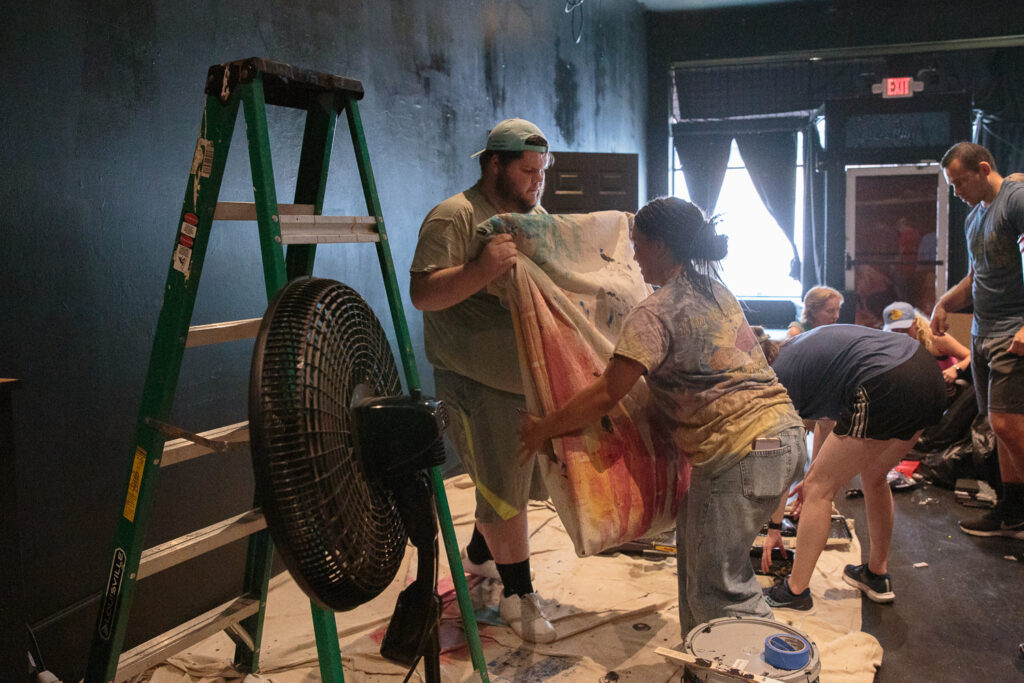
Fundraising cannot only happen when something is wrong
Small arts organizations can easily fall into another dangerous cycle:
We need money. Panic. Fundraise. Survive. Stop fundraising.
Then repeat.
We’re trying very intentionally to build something different.
Our Rising Tide Society creates recurring individual support. We fundraise throughout the year instead of waiting until there is an emergency. We build relationships with sponsors and donors before we need to ask them for something. We budget productions individually and plan major expenses months — sometimes more than a year — in advance.
And we are still learning.
Right now, for example, we have not met every fundraising goal we’ve set for ourselves.
That doesn’t mean we panic.
It means we look at the numbers, adjust, keep communicating and keep doing the work.
Fundraising should not be the fire extinguisher hanging on the wall.
It should be part of the foundation.
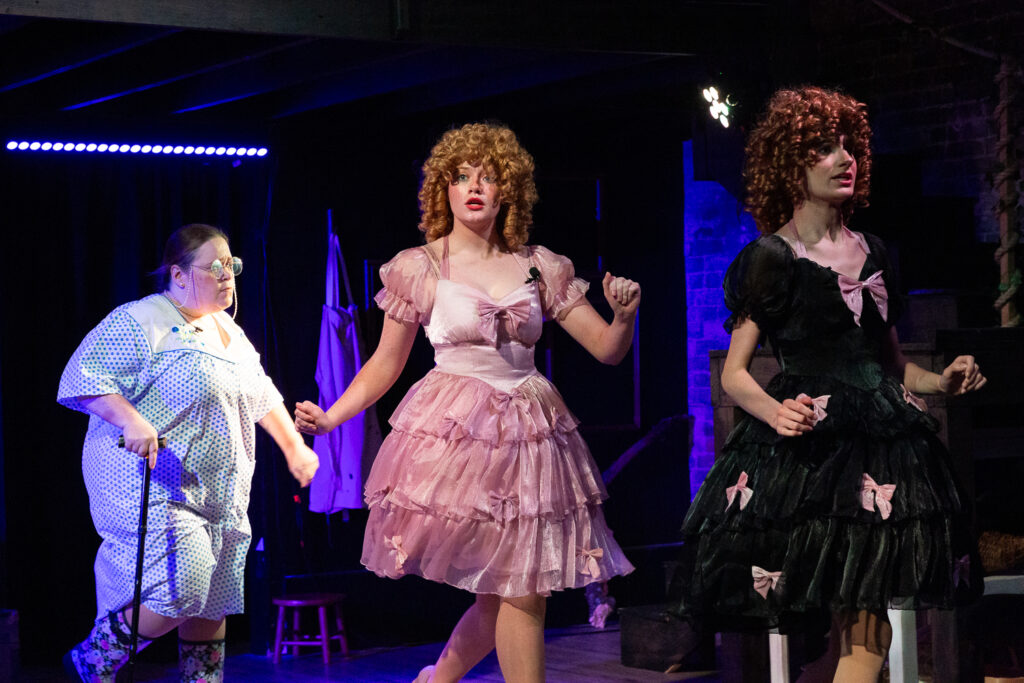
A ticket matters. But a ticket cannot do all of this.
I’ve written before about where your ticket money actually goes, and I won’t repeat the entire breakdown here. If you’re curious, you can read Where Does a $25 Ticket Go?.
The short version is this:
Your ticket is essential.
It is not enough.
Keeping theatre affordable while also keeping the organization financially healthy requires more than ticket revenue. It requires donors, recurring supporters, sponsors, grants and people who believe that having this kind of art in their community is worth investing in.
That is why a $10 monthly gift matters.
It is why a business choosing to sponsor a season matters.
It is why someone buying a chair for a theatre matters.
Those gifts don’t just help us produce something beautiful tonight.
They help make sure we can produce something beautiful five years from now.
What sustainability looks like to me
I don’t want High Tide to become enormous for the sake of becoming enormous.
Some of the things I love most about this company come from our size.
I love that our audiences are only feet away from our actors.
I love that patrons know our staff.
I love that someone can walk into our theatre for the first time and very quickly feel like they are part of something.
I don’t ever want growth to cost us that intimacy.
What I do want is stability.
I want an operating reserve.
I want a strong recurring donor base.
I want enough staff capacity that talented people aren’t constantly operating at their limit.
I want us to plan instead of panic.
I want our budget to grow because our community has invested in the work — not because our expenses grew faster than our ability to support them.
And I want High Tide to still feel like High Tide when all of that happens.
We’re not pretending we’ve figured it all out
This is probably the most important part.
We haven’t.
We’re still growing.
Cash flow can still be tight.
Our staff is stretched.
Some fundraising campaigns exceed our expectations. Others don’t.
There are things I look at today and realize we need to change before next season.
But I would rather tell you that than pretend everything happening behind the curtain is effortless.
Because you are not simply buying tickets to something we have already built.
You are helping us build it.
Every time you attend a show, make a donation, become a recurring donor, sponsor a production, tell us when something isn’t working, share our work with someone new, or simply continue showing up, you make this organization more sustainable.
My goal isn’t for High Tide to survive from production to production.
My goal is for High Tide to be here for a very long time.
Because these bold stories need to be told.
And we will continue telling them.
If someday all we have to work with is a group of artists, a street corner, one chair and an audience willing to gather around us, we’ll find a way to make theatre.
But my job is to make sure we never have to rely on sheer determination alone.
It is to build the infrastructure around those artists.
It is to protect the organization that gives those stories a home.
And it is to make sure that the community that has continued to show up for High Tide has something worth showing up for — year after year after year.